North Island
Lake Turkana North Island
Tuff cone · Kenya · 490m
- Type
- Tuff cone
- Country
- Kenya
- Region
- Eastern Africa / Kenyan Rift Volcanic Province
- Elevation
- 490m
- Coordinates
- 4.063, 36.046
- Last eruption
- Unknown
- Tectonic setting
- Rift zone / Continental crust (> 25 km)
- Landform
- Minor (Basaltic)
- Major rock type
- Trachyandesite / Basaltic Trachyandesite
Geological summary
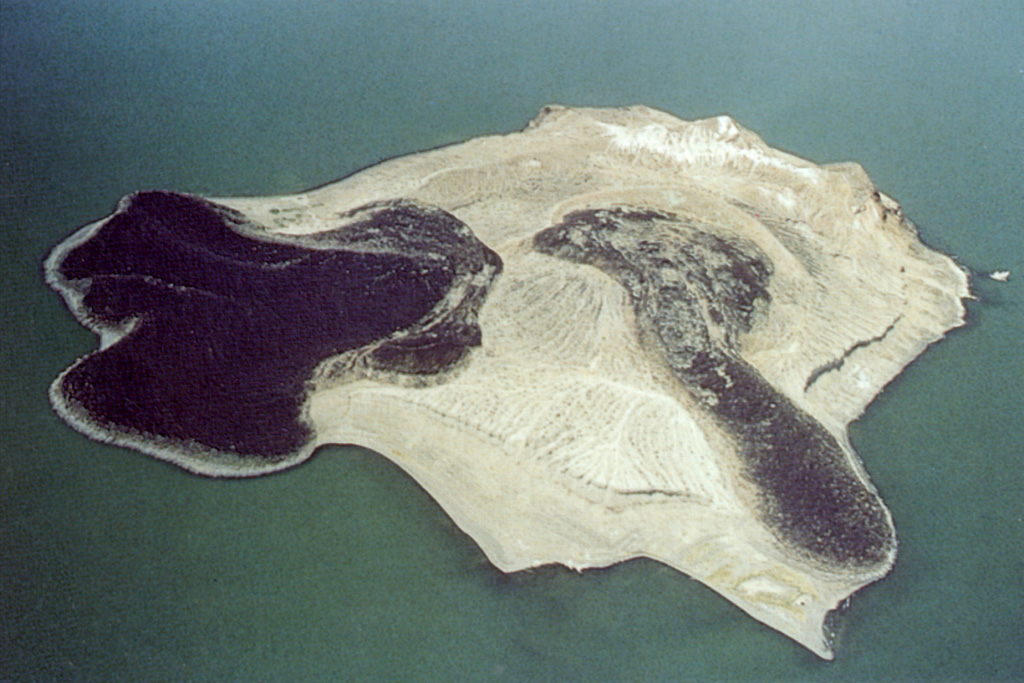
The 2-km-wide North Island in Lake Turkana is the northernmost and smallest of three volcanic islands in the lake. It is primarily composed of trachyandesitic-to-trachytic phreatomagmatic deposits from overlapping eroded tuff cones or tuff rings. The center of the island consists of a young tuff ring about 1 km in diameter nested inside an older tuff ring. Two fresh unvegetated lava flows that reach the lake shore from the central tuff ring form lava deltas on the N and W sides of the island; the northern delta is about 900 m wide. The two blocky lava flows are younger than a terrace that formed less than 10,000 years ago during the last major high-water level (Key and Watkins, 1988). Geothermal activity occurs along a curvilinear ridge on the S portion of the island and on wave-cut platforms and beaches on the SW shoreline.
Eruption history
Detailed timeline
No eruption records available.
External links
- Not yet on Wikipedia (English). You can contribute on Wikidata.
- 🔗 Smithsonian GVP source page
⚠ For reference only. Not for emergency response.