Paka
Shield volcano · Kenya · 1697m
- Type
- Shield volcano
- Country
- Kenya
- Region
- Eastern Africa / Kenyan Rift Volcanic Province
- Elevation
- 1697m
- Coordinates
- 0.920, 36.180
- Last eruption
- -7550
- Tectonic setting
- Rift zone / Continental crust (> 25 km)
- Landform
- Shield
- Major rock type
- Trachyte / Trachydacite
Geological summary
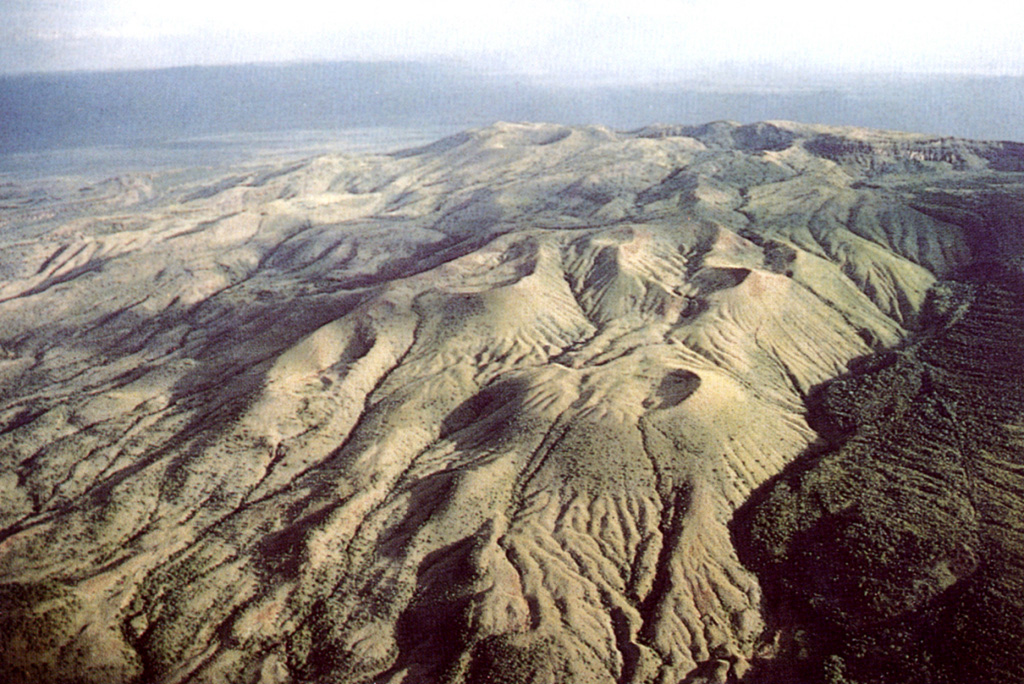
The dominantly Pleistocene Paka shield volcano in the Gregory Rift contains a small 1.5-km-wide summit caldera. Eruption of large volumes of trachytic pyroclastic rocks around the end of the Pleistocene and the beginning of the Holocene formed a NW-trending ridge of pyroclastic cones across the summit region; collapse of this area formed the summit caldera and associated craters. A second large crater SE of the caldera is 0.5 x 1 km wide and contains a pumice cone. The summit caldera is narrowly breached on the N side, which has funneled post-caldera lava flows in this direction. The three youngest post-caldera pyroclastic cones on the NE flank may be only a few hundred years old. A series of viscous trachytic lava flows were erupted from vents on the lower flanks. Young fissure-fed basalts were also erupted to the S, between Paka and Korosi volcanoes. Surficial geothermal activity is widespread at Paka, both within the summit caldera and on extensive portions of the N flank.
From Wikipedia
Paka is a shield volcano located in the Great Rift Valley, Kenya. Geothermal activity is widespread in Paka. Paka means "ochre" in Pokot.
Wikipedia · CC BY-SA · Read full article →
Eruption history
Detailed timeline
- 7550 BCE (±2000 yrs)VEI 4Geological estimateBCE 7550 – Ongoing
External links
⚠ For reference only. Not for emergency response.