Hijiori
Caldera · Japan · 552m
- Type
- Caldera
- Country
- Japan
- Region
- Northwestern Pacific / Northeast Japan Volcanic Arc
- Elevation
- 552m
- Coordinates
- 38.599, 140.162
- Last eruption
- Unknown
- Tectonic setting
- Subduction zone / Continental crust (> 25 km)
- Landform
- Caldera
- Major rock type
- Dacite
Geological summary
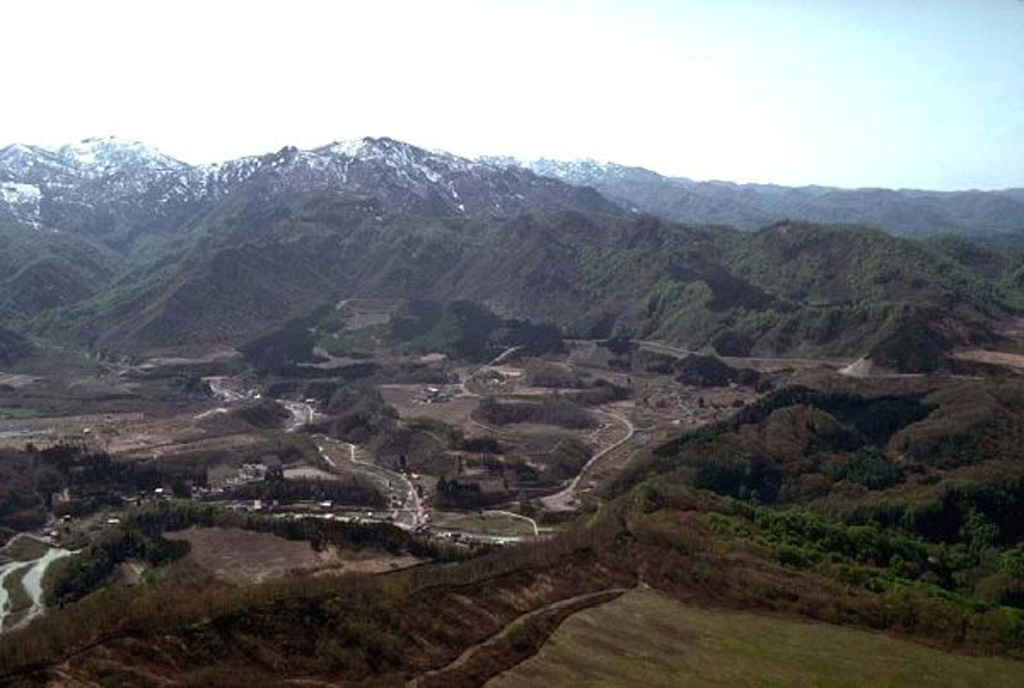
Hijiori caldera is a small, inconspicuous caldera located NE of the Pleistocene Gassan stratovolcano. The low 2.5-km-wide caldera formed during a large eruption about 10,300 radiocarbon years ago. This eruption was accompanied by dacitic pyroclastic flows and tephra fall that extended to the east and reached the Pacific coast and growth of a lava dome. Small local tephra deposits overlie lacustrine deposits. Hot springs occur at Hijiori, and caldera lake deposits have undergone extensive hydrothermal alteration.
Eruption history
Detailed timeline
No eruption records available.
External links
- Not yet on Wikipedia (English). You can contribute on Wikidata.
- 🔗 Smithsonian GVP source page
⚠ For reference only. Not for emergency response.