
Bolshoy Kekuknaysky Volcano

Bolshoi-Kekuknaysky

Shield volcano · Russia · 1401m
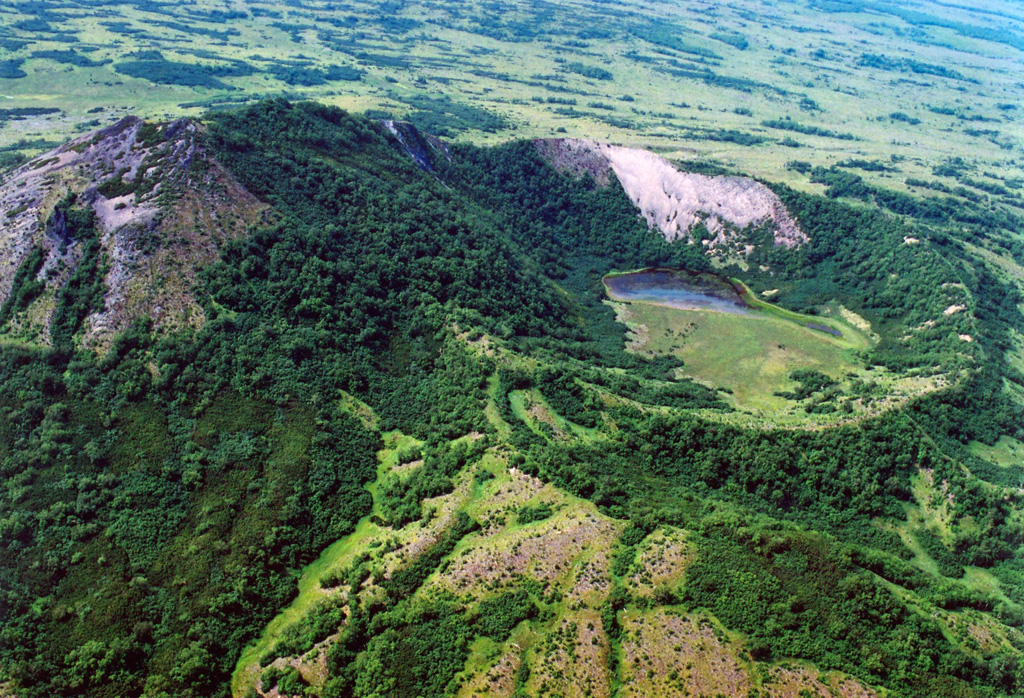
Kekuk crater on the lower northern flank of the Bolshoi-Kekuknaysky volcanic complex formed about 7,200 years ago. The 1-km-wide crater formed beside a lava dome (left) which likely was erupted immediately prior to formation of the crater. Bolshoi and Kekuknaysky are two large partially overlapping Pleistocene edifices that contain scoria cones on their flanks.
Kekuk crater on the lower northern flank of the Bolshoi-Kekuknaysky volcanic complex formed about 7,200 years ago. The 1-km-wide crater formed beside a lava dome (left) which likely was erupted immediately prior to formation of the crater. Bolshoi and Kekuknaysky are two large partially overlapping Pleistocene edifices that contain scoria cones on their flanks. · Photo: Copyrighted photo by Adam Kirilenko, 2003.
Type
Shield volcano
Country
Russia
Region
Northwestern Pacific Volcanic Regions / Central Kamchatka Volcanic Arc
Elevation
1401m
Coordinates
56.483, 157.917
Last eruption
-5310
Tectonic setting
Subduction zone / Continental crust (> 25 km)
Landform
Shield
Major rock type
Basalt / Picro-Basalt
Geological summary

Bolshoi (Bolshoy) and Kekuknaysky are two large, partially overlapping basaltic shield volcanoes located NW and NNW, respectively, of Uksichan volcano. The massive Pleistocene shield volcanoes were constructed west of the axis of the Sredinny Range. Hawaiian-type calderas are located at the summits, and their flanks have numerous youthful cinder cones. The summit caldera of Bolshoi is breached by four radial valleys, whereas the 6-km-wide caldera of Kekuknaysky (also known as Leningradets volcano) is breached to the north. Young cinder cones and lava flows are particularly abundant on the NE flank of Kekuknaysky. Kekuk crater on the lower N flank erupted about 7,200 years ago.

From Wikipedia

Bolshoy Kekuknaysky is a volcano located in the central part of the Kamchatka Peninsula, Russia. It comprises two shield volcanoes: Bolshoy (1301 m) and Kekuknaysky (1401 m). Their lava flows and cinder cones have dammed a valley dissecting the mountain, creating the Bolshoye Goltsovoye and Maloye Goltsovoe lakes. The last eruption occurred at Kekuk Crater, about 7,200 years ago.

Wikipedia · CC BY-SA · Read full article

Eruption history

Summary (VEI over time)
Click a bar to see individual eruptions
5310 BCE~5310 BCE · 1 eruptions · max VEI 35310 BCE5310 BCE5309 BCE5309 BCE5309 BCE

Detailed timeline

  1. 5310 BCE (±100 yrs)VEI 3Geological estimate
    BCE 5310 – Ongoing
    N flank of Kekuknaysky (Kekuk Crater)

External links

⚠ For reference only. Not for emergency response.