Gorny Institute
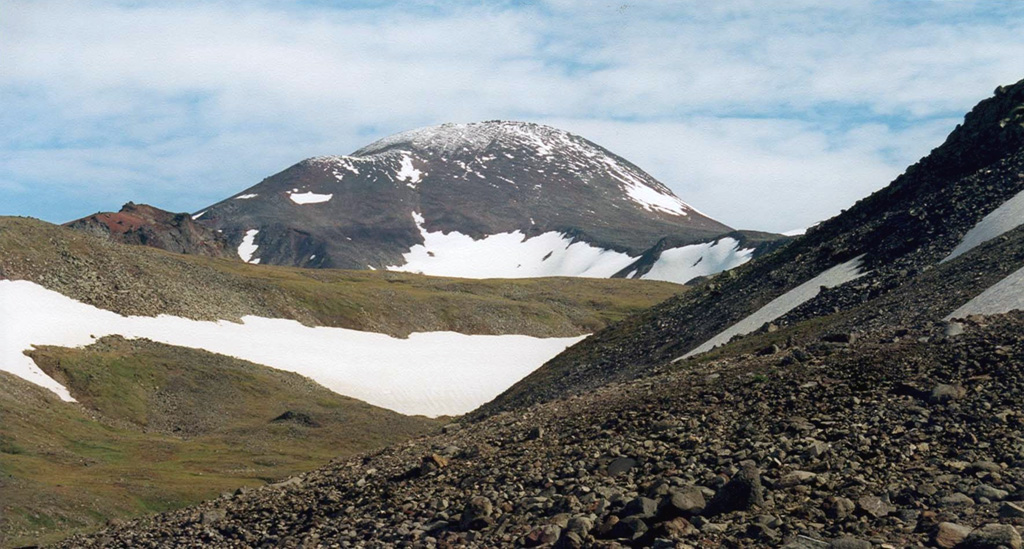
Stratovolcano · Russia · 2125m
- Type
- Stratovolcano
- Country
- Russia
- Region
- Northwestern Pacific / Central Kamchatka Volcanic Arc
- Elevation
- 2125m
- Coordinates
- 57.330, 160.200
- Last eruption
- 1250
- Tectonic setting
- Subduction zone / Continental crust (> 25 km)
- Landform
- Composite
- Major rock type
- Andesite / Basaltic Andesite
Geological summary
Gorny Institute volcano lies at the NE end of chain of small late-Quaternary volcanoes extending NE from Kebeney volcano in the central Sredinny Range. It was constructed near the steep-walled eastern margin of a major NE-SW-trending graben extending NE from Kebeney volcano. A line of cinder cones with the same orientation is located on the NE and SW flanks. More than 20 pyroclastic horizons have been documented, and the last major eruption took place about 700 years ago.
From Wikipedia
Gorny Institute, also spelled Gornyi Institut, is a stratovolcano located in the Sredinny Range on Russia's Kamchatka Peninsula. It lies just east of the Titila volcano and north of the Kebeney volcano.
Wikipedia · CC BY-SA · Read full article →
Eruption history
Detailed timeline
- 1250VEI ?Geological estimate1250 – Ongoing
- 1000VEI ?Geological estimate1000 – Ongoing
- 4250 BCEVEI 0Geological estimateBCE 4250 – OngoingSouth flank (Sedanka lava flow)
External links
⚠ For reference only. Not for emergency response.