Atlasov
Nylgimelkin
Shield volcano · Russia · 1764m
- Type
- Shield volcano
- Country
- Russia
- Region
- Northwestern Pacific / Central Kamchatka Volcanic Arc
- Elevation
- 1764m
- Coordinates
- 57.970, 160.650
- Last eruption
- -3550
- Tectonic setting
- Subduction zone / Continental crust (> 25 km)
- Landform
- Shield
- Major rock type
- Basalt / Picro-Basalt
Geological summary
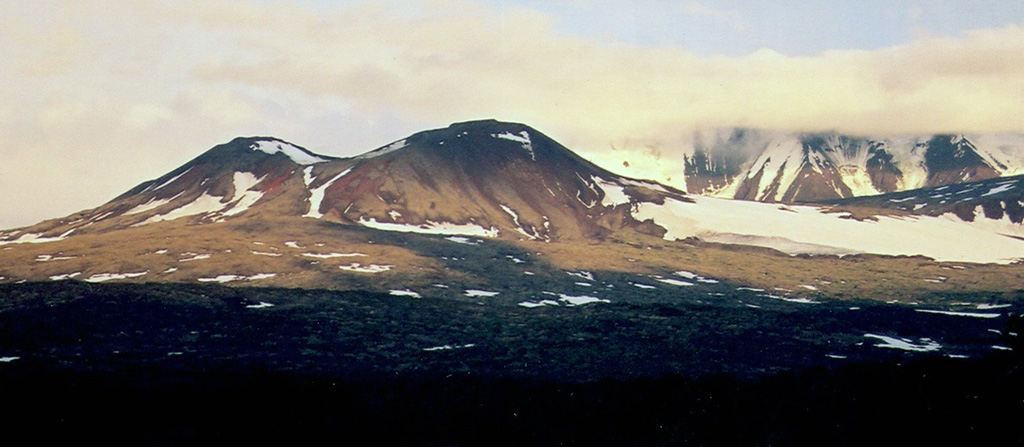
The basaltic Nylgimelkin (also known as Atlasov) shield volcano and the topographically higher but smaller shield of Novagrablenova are dwarfed by their neighbor, the glacier-clad Pleistocene Khuvkhoitun, the highest Quaternary volcano of the northern Sredinny Range. The two youthful shields were constructed on the W and NW flanks of Khuvkhoitun. Lava flows from them extend primarily to the west. Cinder cones and a lava flow were erupted along a fissure at Nylgimelkin about 5,500 years ago.
From Wikipedia
Atlasova is a basaltic shield volcano situated in Kamchatka. It is named after Russian explorer Vladimir Atlasov.
Wikipedia · CC BY-SA · Read full article →
Eruption history
Summary (VEI over time)
Click a bar to see individual eruptions
Detailed timeline
- 3550 BCEVEI ?Geological estimateBCE 3550 – Ongoing
External links
⚠ For reference only. Not for emergency response.