Wudalianchi
Volcanic field · China · 597m
- Type
- Volcanic field
- Country
- China
- Region
- Eastern Asia / Central East Asia Volcanic Province
- Elevation
- 597m
- Coordinates
- 48.722, 126.150
- Last eruption
- 1776
- Tectonic setting
- Intraplate / Continental crust (> 25 km)
- Landform
- Cluster
- Major rock type
- Trachybasalt / Tephrite Basanite
Geological summary
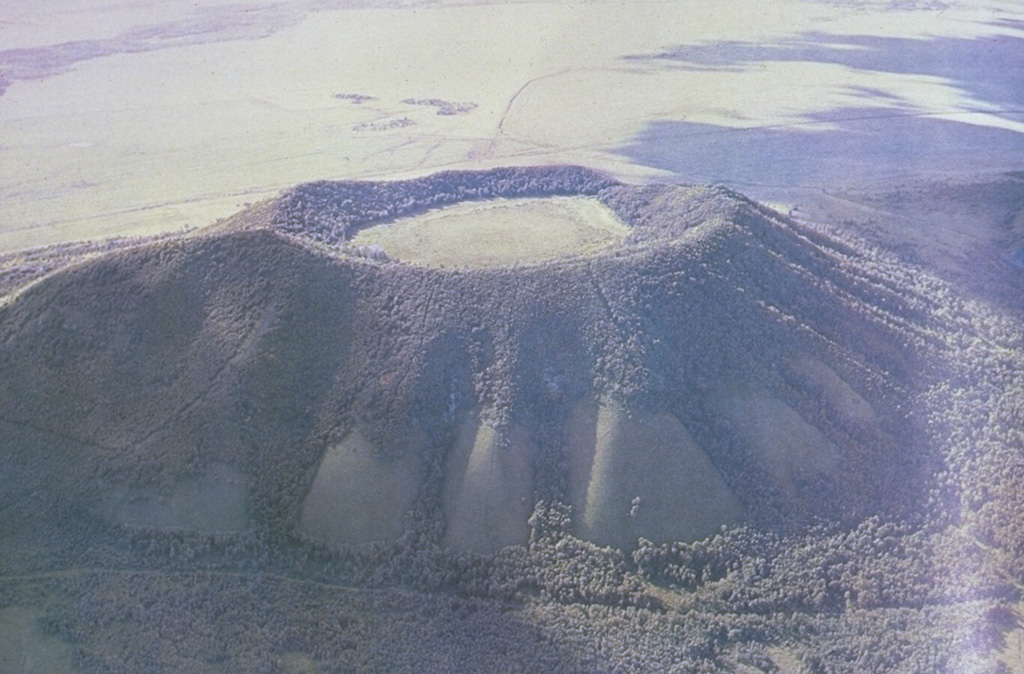
The Wudalianchi volcanic field, named for a string of five scenic lava-dammed lakes, consists of 14 cinder cones capping a 500 km2 shield-like lava plateau in NE China. The volcanic field, whose name means "Five Connected Pools" was formed during five eruptive cycles from the early Pleistocene to historical time. Its ancient name was "Nine Hills," which after the historical eruptions now number 14 hills. The cinder cones were erupted through basement sedimentary and granitic rocks and show a preferred alignment along three chains at the intersection of NE- and NW-trending lineaments. In addition to the historical cinder cones of Laoheishan and Huoshaoshan, Xilongmenshan and Donglongmenshan are Holocene in age. The freshly preserved cones of Laoheishan and Huoshaoshan were formed during eruptions in 1720-21. Fissures at the base of the two new cinder cones fed glassy pahoehoe and aa lava flows that covered 65 km2 and formed the five lakes of Wudalianchi at their eastern and northern margins. Renewed eruptions took place in 1776.
Eruption history
Detailed timeline
- 1776VEI 2Observed1776 – OngoingLaoheishan
- 1720VEI 3Observed1720-01-14 – 1721-06Laoheishan and Huoshaoshan
External links
- Not yet on Wikipedia (English). You can contribute on Wikidata.
- 🔗 Smithsonian GVP source page
⚠ For reference only. Not for emergency response.