St. Michael volcanic field
St. Michael
Volcanic field · United States · 715m
- Type
- Volcanic field
- Country
- United States
- Region
- North America / Northern Alaska-Bering Sea Volcanic Province
- Elevation
- 715m
- Coordinates
- 63.450, -162.120
- Last eruption
- Unknown
- Tectonic setting
- Intraplate / Continental crust (> 25 km)
- Landform
- Cluster
- Major rock type
- Basalt / Picro-Basalt
Geological summary
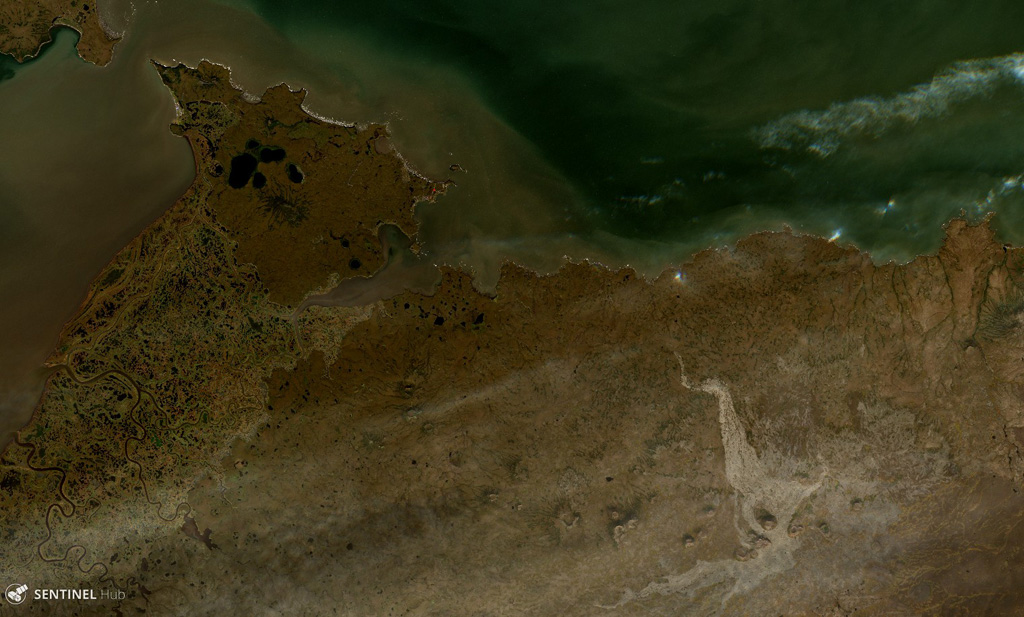
The St. Michael volcanic field, at the south end of Norton Sound, includes more than 55 cones and craters on St. Michael and Stuart islands. Broad low shield volcanoes underlie the younger cones, and maars are located at the SW part of the field, which covers over 3,000 km2 and extends inland along the Golsovia and Kogok rivers. The youngest activity is of Holocene age, and native tradition says that a village was submerged by lava three times (Dall, 1870).
From Wikipedia
The St. Michael volcanic field is a volcanic field located on St. Michael and Stuart Islands in western Alaska, United States. It contains 55 cones and craters, including low broad shield volcanoes and maars. It is considered part of the Bering Sea Volcanic Province.
Wikipedia · CC BY-SA · Read full article →
Eruption history
Detailed timeline
No eruption records available.
External links
⚠ For reference only. Not for emergency response.