Buzzard Creek
Tuff ring · United States · 830m
- Type
- Tuff ring
- Country
- United States
- Region
- North America / Alaska Peninsula Volcanic Arc
- Elevation
- 830m
- Coordinates
- 64.062, -148.433
- Last eruption
- -1050
- Tectonic setting
- Subduction zone / Continental crust (> 25 km)
- Landform
- Minor (Basaltic)
- Major rock type
- Basalt / Picro-Basalt
Geological summary
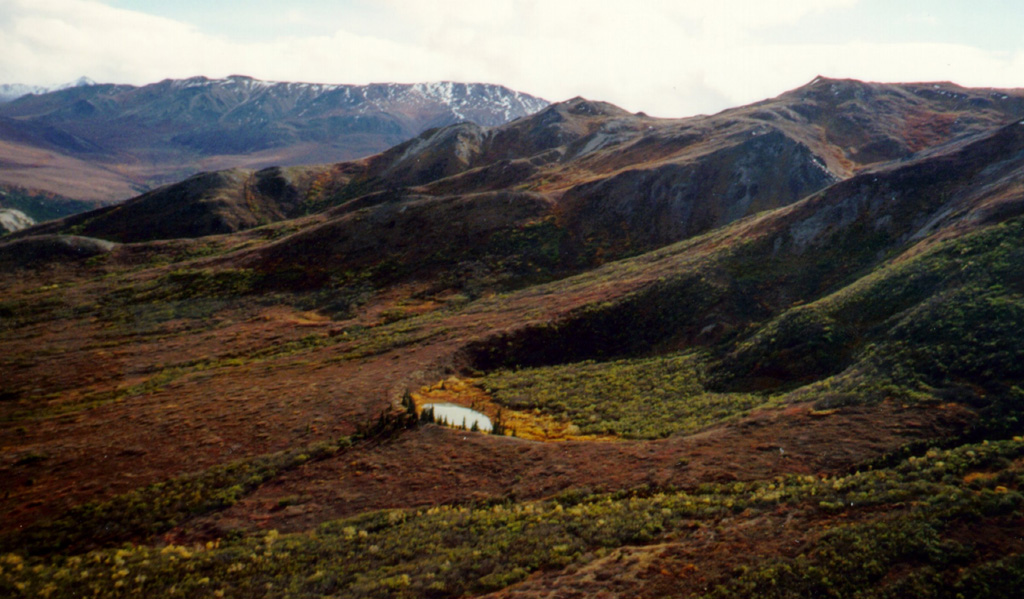
Two Holocene tuff rings form craters 300 and 66 m wide near the headwaters of Buzzard Creek at the northern foot of the central Alaska Range NE of the town of Healy along the Parks Highway. Both contain small lakes, and the smaller ring is about 200 m SE of the larger one. The total volume of ejecta, most of which is accessory material, probably does not exceed 0.001 km3. The ejecta overlies young glacial terraces that correlate with a glacial stage that ended about 10,000 years ago, and radiocarbon dates give an age for the eruption that formed the tuff rings of about 3,000 years. This minor volcanic feature lies along trend with the Aleutian arc, but is located 320 km NE of its nearest Holocene neighbor (Hayes volcano), and directly over the northernmost corner of the subducting Pacific Plate.
From Wikipedia
The Buzzard Creek craters are two tuff rings near Healy, Alaska, United States. Its highest point is 2,723 ft.
Wikipedia · CC BY-SA · Read full article →
Eruption history
Detailed timeline
- 1050 BCEVEI 2Geological estimateBCE 1050 – Ongoing
External links
⚠ For reference only. Not for emergency response.