Black Butte Crater Lava Field
Shield volcano · United States · 1478m
- Type
- Shield volcano
- Country
- United States
- Region
- North America / Yellowstone-Snake River Hotspot Volcano Group
- Elevation
- 1478m
- Coordinates
- 43.185, -114.354
- Last eruption
- -8180
- Tectonic setting
- Rift zone / Continental crust (> 25 km)
- Landform
- Shield
- Major rock type
- Basalt / Picro-Basalt
Geological summary
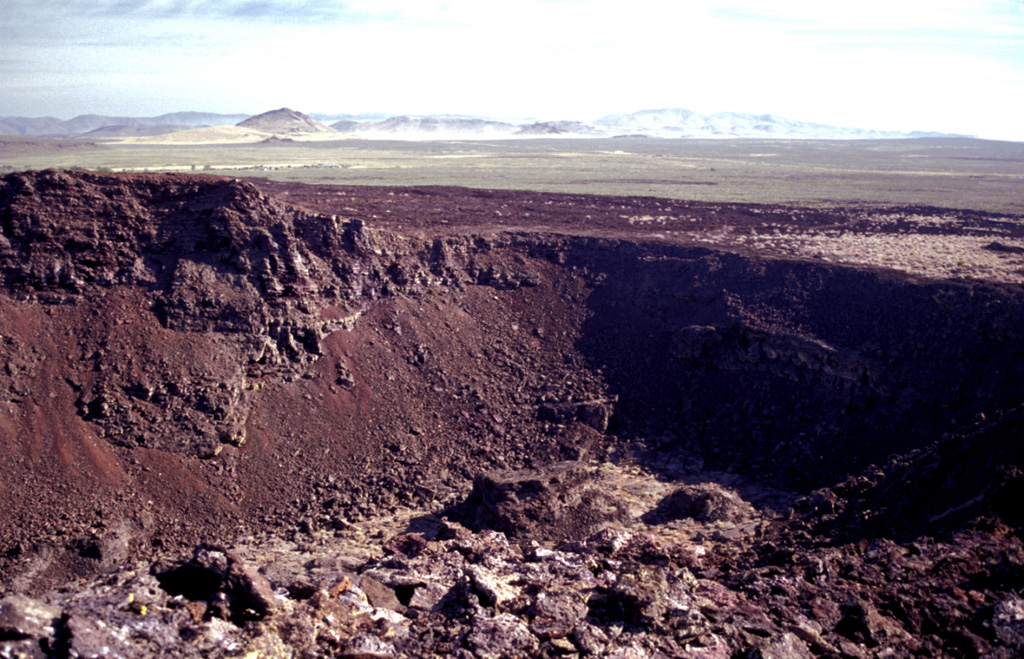
The Black Butte Crater lava field is the westernmost of the young lava fields of the Eastern Snake River Plain. It lies north of Twin Falls, Idaho, and created an L-shaped lava flow 2-5 km wide that extends 60 km S and then west. A single radiocarbon age of 10,130 +/- 350 years BP was obtained for lava flows here (Kuntz et al., 1986). Black Butte Crater caps a lava shield at the NE end of the flow field. The vent area contains a complex lava lake that forms a six-part flower-petal like depression with steep walls up to 30 m high that covers an area of 2 km2. A lava tube and channel system extending 5 km SE of the crater displays both roofed and collapsed portions. The Big Wood and Little Wood rivers follow the northern and southern margins of the distal part of the lava flow, respectively. The voluminous flow diverted the river channels so that they now join 40 km W of their former confluence.
Eruption history
Detailed timeline
- 8180 BCE (±350 yrs)VEI 0Geological estimateBCE 8180 – OngoingBlack Butte Crater
External links
- Not yet on Wikipedia (English). You can contribute on Wikidata.
- 🔗 Smithsonian GVP source page
⚠ For reference only. Not for emergency response.