Comondu-La Purisima
Volcanic field · Mexico · 780m
- Type
- Volcanic field
- Country
- Mexico
- Region
- Eastern Pacific / Gulf of California Rift Volcanic Province
- Elevation
- 780m
- Coordinates
- 26.000, -111.920
- Last eruption
- Unknown
- Tectonic setting
- Rift zone / Continental crust (> 25 km)
- Landform
- Cluster
- Major rock type
- Trachyandesite / Basaltic Trachyandesite
Geological summary
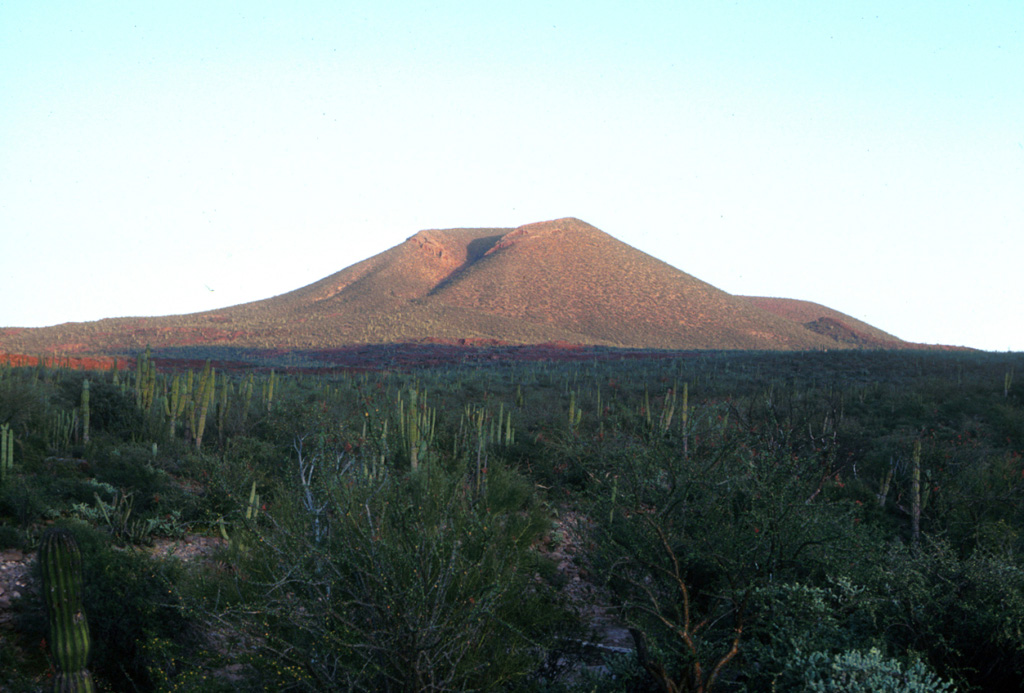
The Comondú-La Purísima volcanic field, located in southern Baja California, west of the Sierra de la Giganta, dates back to the Miocene. However, the youthful morphology of some cinder cones suggested possible Holocene ages (Sawlan, 1991). The youngest lavas form blocky flows with flow ridges and are mostly located in the area between Comondú and the La Purísima river. Vents usually occur along NNW-trending faults, and many lava flows are offset, sometimes repeatedly, along grabens. Both basaltic and andesitic lava flows are present. The former are typically 5-10 m thick, and the latter are up to 60-80 m thick and form dense, glassy flows with subhorizontal fractures.
Eruption history
Detailed timeline
No eruption records available.
External links
- Not yet on Wikipedia (English). You can contribute on Wikidata.
- 🔗 Smithsonian GVP source page
⚠ For reference only. Not for emergency response.