Unnamed volcano
Central Andean Arc at 25.1°S
Pyroclastic cone · Argentina · 4652m
- Type
- Pyroclastic cone
- Country
- Argentina
- Region
- South America / Central Andean Volcanic Arc
- Elevation
- 4652m
- Coordinates
- -25.078, -68.266
- Last eruption
- Unknown
- Tectonic setting
- Subduction zone / Continental crust (> 25 km)
- Landform
- Minor
- Major rock type
- Andesite / Basaltic Andesite
Geological summary
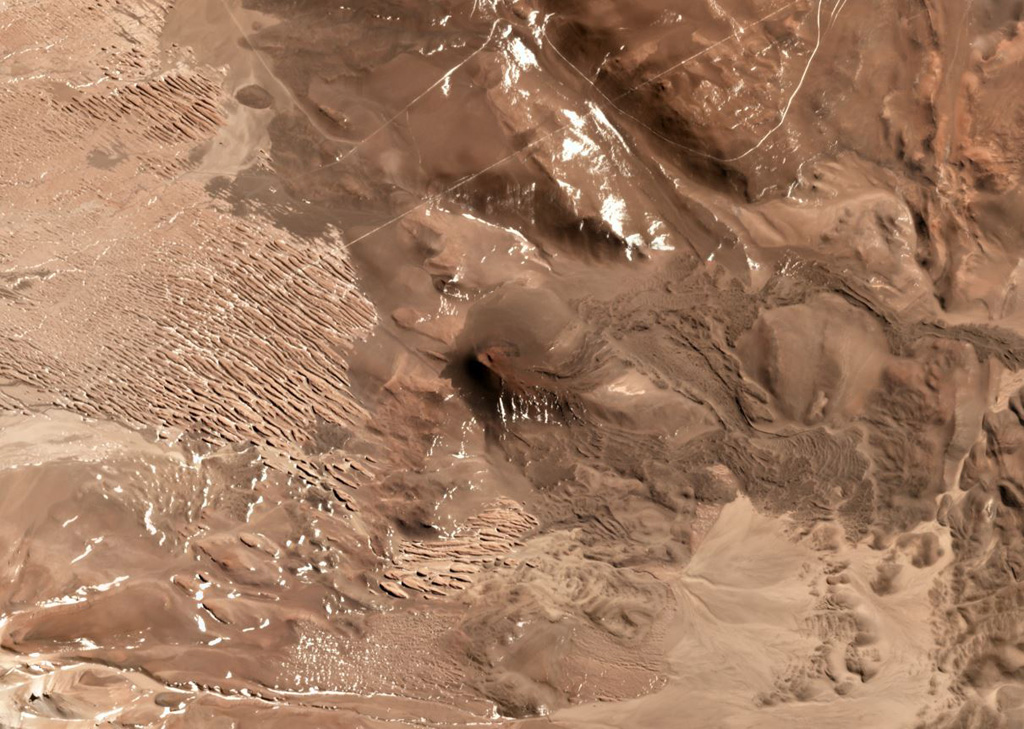
An isolated basaltic andesite cinder cone was constructed on top of Miocene ignimbrites and lava flows between the Corrida de Cori range on the Chile/Argentina border and the Salar Río Grande in Argentina. Blocky lava flows from the cone descended in a broad lobe to the SE and in a narrow tongue to the E nearly to the Salar Río Grande. A second smaller vent lies about 800 m NW of the cinder cone. The relatively fluid lava flows display surficial breadcrust textures and were considered by Richards and Villeneuve (2002) to be very young, possibly of Holocene age.
Eruption history
Detailed timeline
No eruption records available.
External links
- Not yet on Wikipedia (English). You can contribute on Wikidata.
- 🔗 Smithsonian GVP source page
⚠ For reference only. Not for emergency response.