Crater Basalt Volcanic Field
Volcanic field · Argentina · 1344m
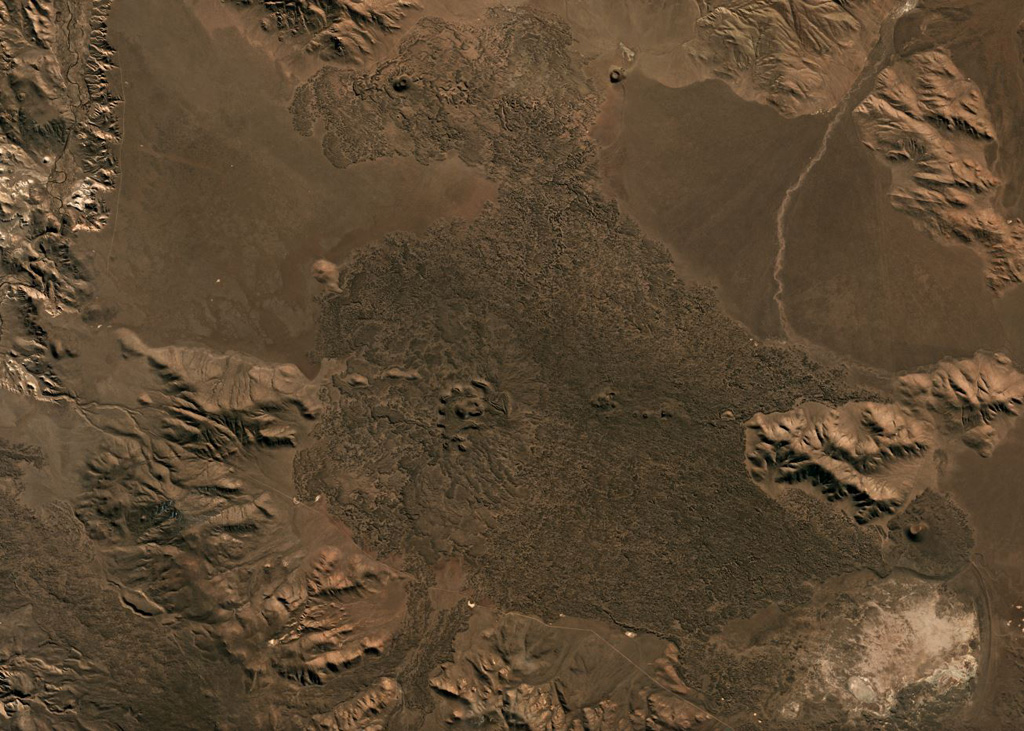
- Type
- Volcanic field
- Country
- Argentina
- Region
- South America / Southern Andean Volcanic Arc
- Elevation
- 1344m
- Coordinates
- -42.018, -70.194
- Last eruption
- Unknown
- Tectonic setting
- Intraplate / Continental crust (> 25 km)
- Landform
- Cluster
- Major rock type
- Trachybasalt / Tephrite Basanite
Geological summary
The Crater Basalt volcanic field in the northern Patagonia region of Argentina covers an area of about 700 km2. The field lies about 400 km E of the Peru-Chile trench along the broad regional Gastre fault system. Nine cinder cones and spatter cones produced blocky lava flows of alkali basaltic, basanitic, and trachybasaltic composition. One of the largest features is Cerro Fermín, a cinder cone that produced multiple lava flows. The highest cone, Cerro Negro, fed lava flows that traveled to the W, E, and then NE, where its distal margin is cut by a provincial road. Some of the lava flows, such as those from Cerro Ventana and Cerro Contreras, cover Holocene shorelines of playa lakes.
Eruption history
Detailed timeline
No eruption records available.
External links
- Not yet on Wikipedia (English). You can contribute on Wikidata.
- 🔗 Smithsonian GVP source page
⚠ For reference only. Not for emergency response.