Sturge Island
Stratovolcano · Antarctica · 1167m
- Type
- Stratovolcano
- Country
- Antarctica
- Region
- Antarctic & Scotia / Balleny Hotspot Volcano Group
- Elevation
- 1167m
- Coordinates
- -67.400, 164.830
- Last eruption
- Unknown
- Tectonic setting
- Rift zone / Oceanic crust (< 15 km)
- Landform
- Composite
- Major rock type
- Trachybasalt / Tephrite Basanite
Geological summary
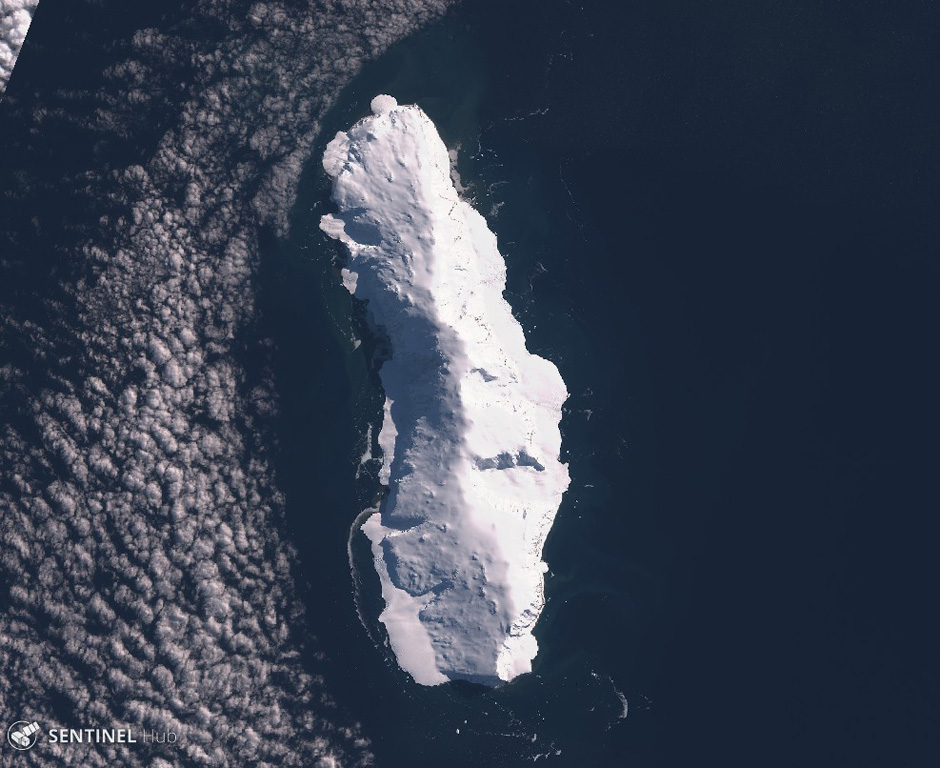
Sturge is the largest and southernmost of the Balleny Islands, which are located just off the coast of Antarctica's Victoria Land. The 44-km-long island is completely mantled by an icecap and has a prominent summit, Russel Peak, at the northern end. "Volcanic activity" was reported on a U.S. Navy chart, but no indications of present or past activity were noted in 1959 (Catalog of Active Volcanoes of the World). No detailed geologic studies have been conducted in the inaccessible Balleny Islands.
From Wikipedia
Sturge Island is one of the three main islands in the uninhabited Balleny Islands group located in the Southern Ocean. It lies 25 km (16 mi) southeast of Buckle Island and 95 km (59 mi) north-east of Belousov Point on the Antarctic mainland. The island, in Oates Land, also forms part of the Ross Dependency, claimed by New Zealand.
Wikipedia · CC BY-SA · Read full article →
Eruption history
Detailed timeline
No eruption records available.
External links
⚠ For reference only. Not for emergency response.