The Pleiades
Pleiades, The
Stratovolcano · Antarctica · 3040m
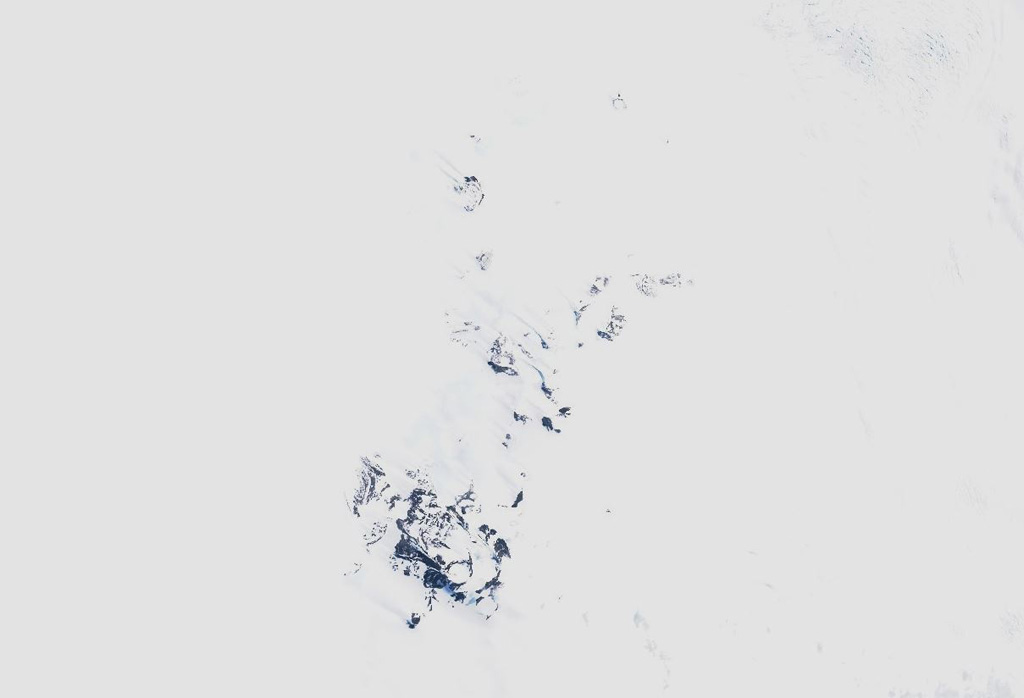
- Type
- Stratovolcano
- Country
- Antarctica
- Region
- Antarctic & Scotia / McMurdo Volcanic Province
- Elevation
- 3040m
- Coordinates
- -72.670, 165.500
- Last eruption
- -1050
- Tectonic setting
- Intraplate / Continental crust (> 25 km)
- Landform
- Composite
- Major rock type
- Trachyandesite / Basaltic Trachyandesite
Geological summary
The Pleiades volcano consists of the small trachytic Mount Pleiones stratovolcano which, along with several lava domes and nested cinder cones with well-preserved craters, rises above the broad Evans Neve plateau. Located in the Melbourne Volcanic Province of Antarctica's northern Victoria Land near the western coast of the Ross Sea, they appear to be among the youngest volcanic centers in Antarctica. A Potassium-Argon age of 3,000 years was obtained from the Taygete cone NNE of Mount Pleiones. Other dates of 12-40,000 years support a youthful age despite the large analytical uncertainties.
From Wikipedia
The Pleiades are a volcanic group in northern Victoria Land of Antarctica. It consists of youthful cones and domes with Mount Atlas/Mount Pleiones, a small stratovolcano formed by three overlapping cones, being the dominant volcano and rising 500 m (1,600 ft) above the Evans Névé plateau. Two other named cones are Alcyone Cone and Taygete Cone, the latter of which has been radiometrically dated to have erupted during the Holocene. A number of tephra layers across Antarctica have been attributed to eruptions of this volcanic group, including several that may have occurred within the last few hundred years.
Wikipedia · CC BY-SA · Read full article →
Eruption history
Detailed timeline
- 1050 BCE (±14000 yrs)VEI ?Geological estimateBCE 1050 – OngoingNE of Mount Pleiones (Taygete Cone)
External links
⚠ For reference only. Not for emergency response.