Emuruangogolak
Volcán en escudo · Kenya · 1285 m
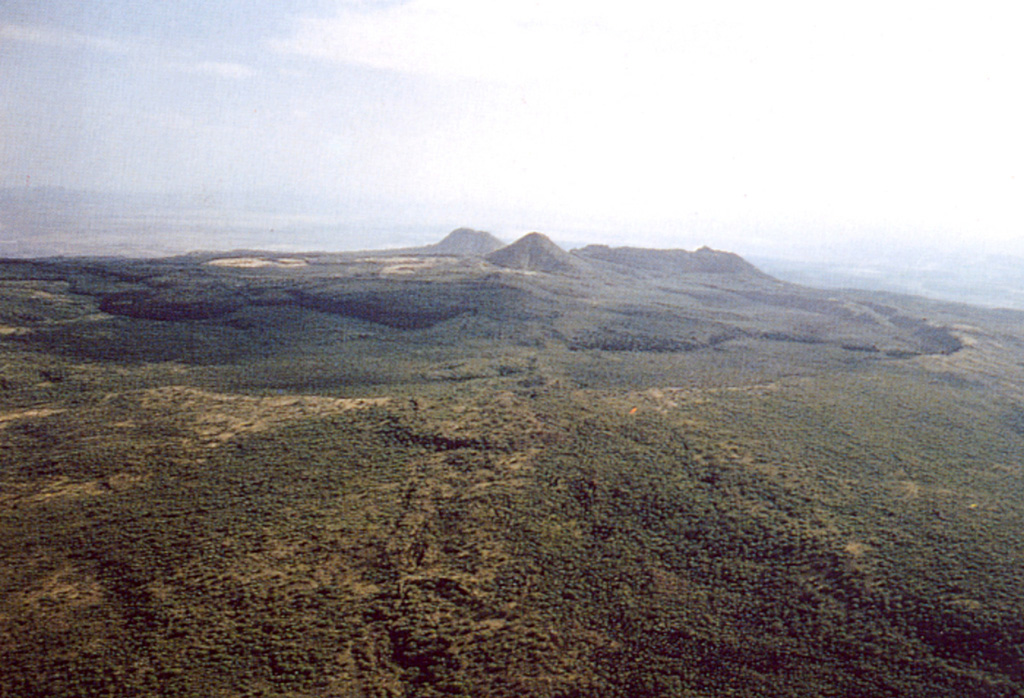
- Tipo
- Volcán en escudo
- País
- Kenya
- Región
- África Oriental / Kenyan Rift Volcanic Province
- Altitud
- 1285 m
- Coordenadas
- 1.500, 36.330
- Última erupción
- 1910
- Contexto tectónico
- Rift zone / Continental crust (> 25 km)
- Forma volcánica
- Shield
- Roca principal
- Trachyte / Trachydacite
Resumen geológico
The broad Emuruangogolak shield volcano is situated at a narrow constriction in the Gregory Rift and almost completely straddles it. A 5 x 3.5 km summit caldera formed about 38,000 years ago. Since then trachytic and basaltic lava flows were erupted on the northern and southern flanks and within the caldera. A NNE-SSW-trending chain of lake-filled basaltic maars extends along the floor of the rift from the lower flanks of the volcano. Young lava flows were also erupted from vents along rift valley faults. Well-preserved cones erupted along rift-parallel faults cutting the volcano; the latest eruption produced a trachytic lava flow dated from secular magnetic variation measurements at about the beginning of the 20th century. Fumarolic activity and hot steaming ground occurs along NNE-trending fissures within the caldera and along the lower NW flanks.
Resumen de Wikipedia
Resumen breve — abre el artículo completo para más detalle.
El Emuruangogolak es un volcán del Gregory Rift.
Wikipedia · CC BY-SA · Leer artículo completo →
Historial de erupciones
Línea de tiempo detallada
- 1910 (±50 años)VEI 0Estimación geológica1910-07-02 – En cursoSouth caldera rim
- 1700 (±100 años)VEI 0Estimación geológica1700 – En cursoSouth caldera rim
- 1300 (±150 años)VEI 0Estimación geológica1300 – En cursoNE flank
- 1230 (±150 años)VEI 0Estimación geológica1230 – En cursoNE flank
- 1160 (±150 años)VEI 0Estimación geológica1160 – En cursoNE flank
- 1120 (±150 años)VEI 0Estimación geológica1120 – En cursoNorth flank
- 6550 a. C. (±1500 años)VEI ?Estimación geológicaBCE 6550 – En cursoNorth flank
- 8050 a. C. (±1000 años)VEI ?Estimación geológicaBCE 8050 – En cursoNorth flank
Enlaces externos
⚠ Solo como referencia. No apto para respuesta ante emergencias.