Perbakti-Gagak
Estratovolcán · Indonesia · 1726 m
- Tipo
- Estratovolcán
- País
- Indonesia
- Región
- Sunda y Banda / Sunda Volcanic Arc
- Altitud
- 1726 m
- Coordenadas
- -6.750, 106.675
- Última erupción
- 1939
- Contexto tectónico
- Subduction zone / Continental crust (> 25 km)
- Forma volcánica
- Composite
- Roca principal
- Andesite / Basaltic Andesite
Resumen geológico
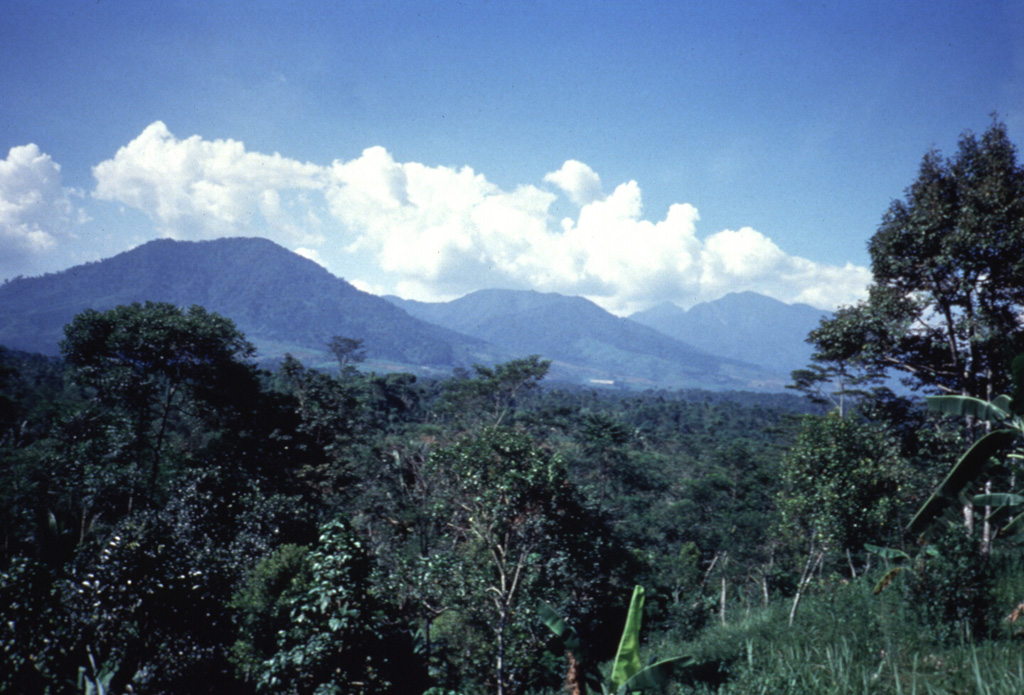
The Perbakti-Gagak volcanic complex, also known as Kiaraberes-Gagak, is a cluster of deeply eroded stratovolcanoes situated immediately SW of Salak volcano. The summit ridge of Gunung Perbakti is elongated in a NW-SE direction, and Gunung Endut volcano rises above a saddle to its SW. Gunung Gagak, to the NW, is capped by pumice and obsidian, with obsidian lava flows extending N and NE. Quaternary rhyolitic lava domes form a NNE-trending chain at the eastern side of the complex. Two 2-km-wide depressions on the northern and southern sides of Perbakti form the headwaters of the Kaluwung Herang and Pamatutan rivers, respectively. The complex is marked by vigorous geothermal activity. Fumaroles, mud pots, and hot springs are located on the S and SE flanks of Perbakti and at the Kiaraberes area, which includes the commercial geothermal field of Awibengkok. Mild phreatic eruptions took place during the Holocene into historical time from flank fumarolic fields.
Historial de erupciones
Línea de tiempo detallada
- 1939VEI 1Observado1939-04-06 – En cursoKawah Parabakti
- 1938VEI 1Observado1938-12-16 – En cursoKawah Parabakti
- 1936VEI 1Observado1936-10-26 – 1936-10-28Cipanas Parabakti
- 1935VEI 1Observado1935-05-31 – En cursoKawah Cibodas
- 1929VEI 1Observado1929-07-02 – En cursoCibeureum West
- 1923VEI 1Observado1923-06-16 – En cursoKawah Cibodas
- 6450 a. C.VEI ?Estimación geológicaBCE 6450 – En cursoKiaraberes
Enlaces externos
- Todavía no está en Wikipedia (Español). Puede contribuir en Wikidata.
- 🔗 Página original del Smithsonian GVP
⚠ Solo como referencia. No apto para respuesta ante emergencias.