Saltar al contenido principal

Bolshói Kekuknaiski

Bolshoi-Kekuknaysky

Volcán en escudo · Russia · 1401 m
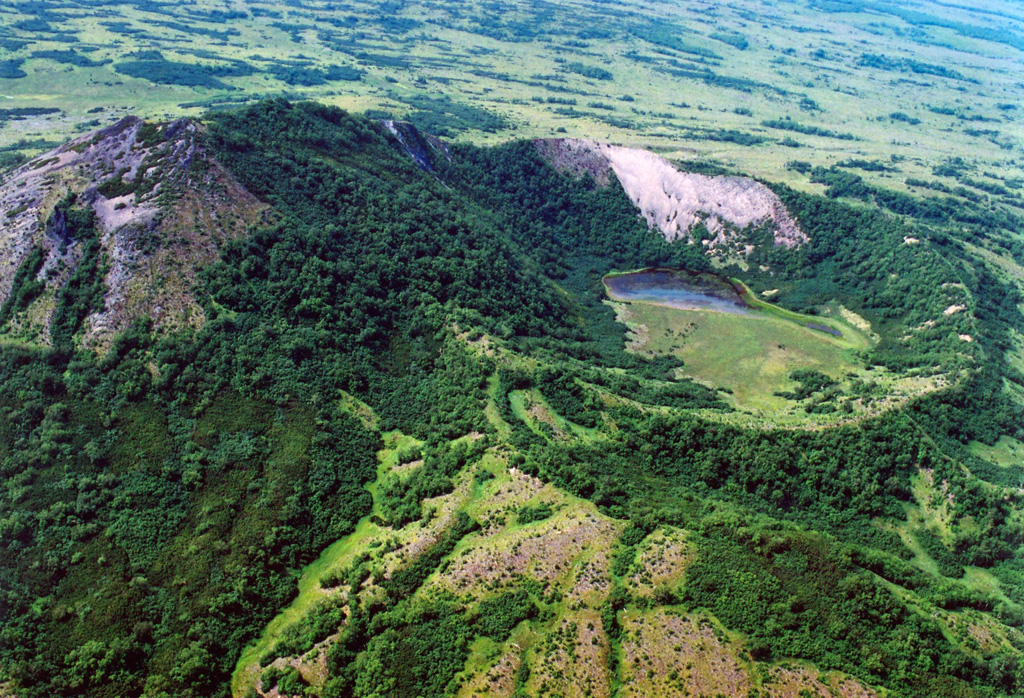
Kekuk crater on the lower northern flank of the Bolshoi-Kekuknaysky volcanic complex formed about 7,200 years ago. The 1-km-wide crater formed beside a lava dome (left) which likely was erupted immediately prior to formation of the crater. Bolshoi and Kekuknaysky are two large partially overlapping Pleistocene edifices that contain scoria cones on their flanks.
Kekuk crater on the lower northern flank of the Bolshoi-Kekuknaysky volcanic complex formed about 7,200 years ago. The 1-km-wide crater formed beside a lava dome (left) which likely was erupted immediately prior to formation of the crater. Bolshoi and Kekuknaysky are two large partially overlapping Pleistocene edifices that contain scoria cones on their flanks. · Foto: Copyrighted photo by Adam Kirilenko, 2003.
Tipo
Volcán en escudo
País
Russia
Región
Northwestern Pacific Volcanic Regions / Central Kamchatka Volcanic Arc
Altitud
1401 m
Coordenadas
56.483, 157.917
Última erupción
-5310
Contexto tectónico
Subduction zone / Continental crust (> 25 km)
Forma volcánica
Shield
Roca principal
Basalt / Picro-Basalt
Resumen geológico

Bolshoi (Bolshoy) and Kekuknaysky are two large, partially overlapping basaltic shield volcanoes located NW and NNW, respectively, of Uksichan volcano. The massive Pleistocene shield volcanoes were constructed west of the axis of the Sredinny Range. Hawaiian-type calderas are located at the summits, and their flanks have numerous youthful cinder cones. The summit caldera of Bolshoi is breached by four radial valleys, whereas the 6-km-wide caldera of Kekuknaysky (also known as Leningradets volcano) is breached to the north. Young cinder cones and lava flows are particularly abundant on the NE flank of Kekuknaysky. Kekuk crater on the lower N flank erupted about 7,200 years ago.

Resumen de Wikipedia

El Bolshói Kekuknaiski es un volcán ubicado en la parte central de la península de Kamchatka, Rusia. Comprende dos volcanes en escudo: Bolshói y Kekuknaiski. Sus flujos de lava y conos de ceniza han represado un valle que disecciona la montaña, creando los lagos Bolshoye Goltsovoye y Maloye Goltsovoye. La última erupción ocurrió en el cráter Kekuk, hace unos 7200 años.

Wikipedia · CC BY-SA · Leer artículo completo

Historial de erupciones

Resumen (VEI en el tiempo)
Haga clic en una barra para ver erupciones individuales
5310 BCE~5310 BCE · 1 erupciones · VEI máx. 35310 BCE5310 BCE5309 BCE5309 BCE5309 BCE

Línea de tiempo detallada

  1. 5310 a. C. (±100 años)VEI 3Estimación geológica
    BCE 5310 – En curso
    N flank of Kekuknaysky (Kekuk Crater)

Enlaces externos

⚠ Solo como referencia. No apto para respuesta ante emergencias.