Mount Silali
Silali
Gunung api perisai · Kenya · 1528 m
- Tipe
- Gunung api perisai
- Negara
- Kenya
- Wilayah
- Afrika Timur / Kenyan Rift Volcanic Province
- Ketinggian
- 1528 m
- Koordinat
- 1.150, 36.230
- Letusan terakhir
- -5050
- Kondisi tektonik
- Rift zone / Continental crust (> 25 km)
- Bentuk lahan
- Shield
- Batuan utama
- Trachyte / Trachydacite
Ringkasan geologi
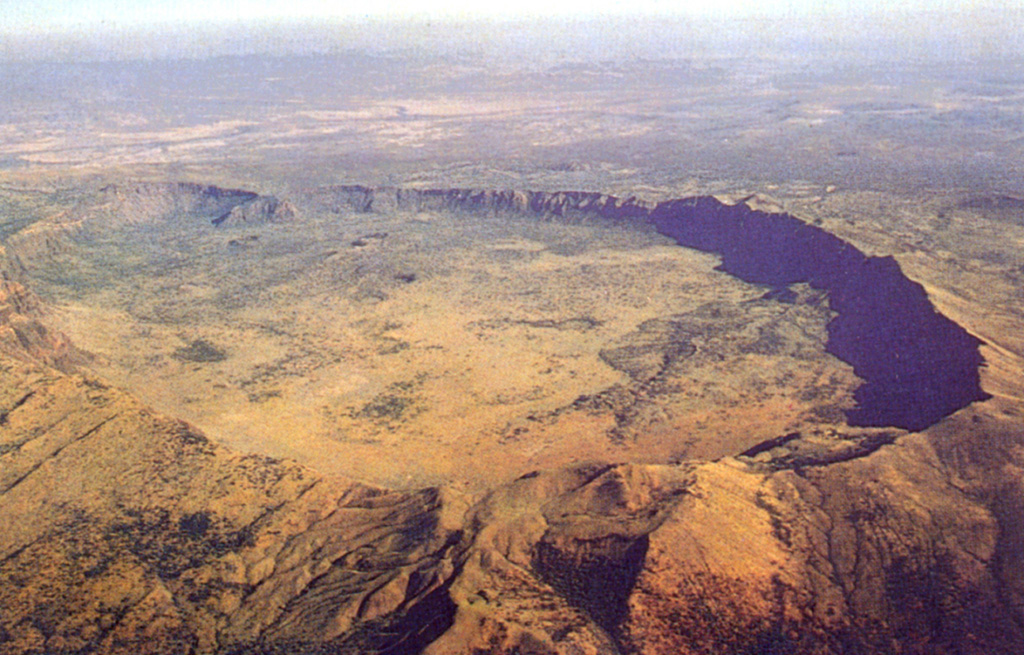
The 30-km-wide Silali trachytic shield volcano, the largest Quaternary volcano in the northern Gregory Rift, completely straddles the East African Rift. The 5 x 8 km summit caldera with 300 m deep walls is thought to have formed incrementally about 63,000 years ago, related to eruption of the Kantenmening basaltic and trachytic lava flows. A series of summit-area lava benches formed by eruptions from circumferential fissures is morphologically similar to Galapagos Islands volcanoes. The N, E, and S flanks are cut by a prominent broad rift zone 10 km wide and 30 km long, with numerous pyroclastic cones. Lava domes on the upper E flank formed during the late Pleistocene and early Holocene, until about 7,000 years ago. Youthful cones are common on the caldera floor and on the N and NE flanks; the youngest lava flows may be little more than a few hundred years old (Williams et al. 1984). Geothermal activity occurs within the caldera and on the upper E flanks.
Ringkasan Wikipedia
Ringkasan InggrisMount Silali is a dormant volcano in the Gregory Rift Valley, near Kapedo, Kenya. Silali is south of the Suguta Valley, which reaches northward to Lake Turkana, and is about 70 kilometres (43 mi) north of Lake Baringo.
Wikipedia · CC BY-SA · Baca artikel lengkap →
Riwayat letusan
Garis waktu rinci
- 5050 SM (±2000 tahun)VEI ?Perkiraan geologiBCE 5050 – BerlangsungUpper east flank
- 6050 SM (±3000 tahun)VEI ?Perkiraan geologiBCE 6050 – BerlangsungEastern part of caldera
- 7050 SM (±2000 tahun)VEI ?Perkiraan geologiBCE 7050 – BerlangsungUpper east flank
Tautan eksternal
⚠ Untuk referensi saja. Bukan untuk tanggap darurat.