Kita-Bayonnaise
Caldera · Japan · 360 m (sottomarino)
- Tipo
- Caldera
- Paese
- Japan
- Regione
- Pacifico nord-occidentale / Izu Volcanic Arc
- Altitudine
- 360 m (sottomarino)
- Coordinate
- 32.100, 139.850
- Ultima eruzione
- Sconosciuto
- Contesto tettonico
- Subduction zone / Oceanic crust (< 15 km)
- Forma vulcanica
- Caldera
- Roccia principale
- Rhyolite
Sintesi geologica
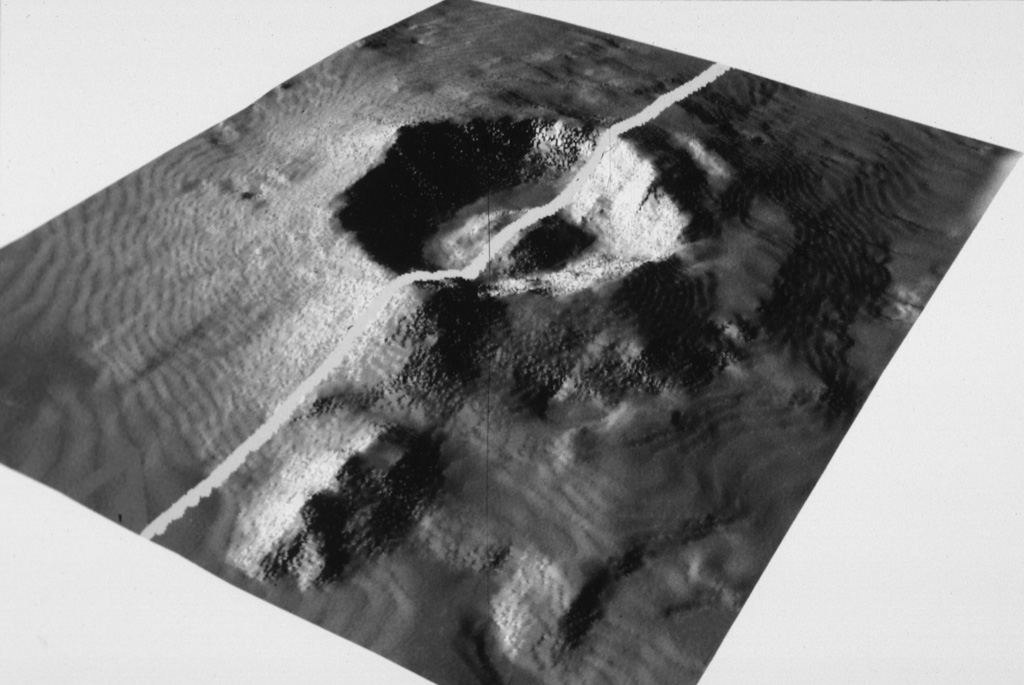
The large submarine Kita-Bayonnaise (North Bayonnaise) submarine caldera, also known as Myojin Knoll, lies between the Aogashima and Myojinsho (also called Beyonesu Rocks) calderas abotu 300 km SSE of the Izu Peninsula. The 6-7 km wide caldera has walls 500-900 m high that reveal rhyolitic lava flows, shallow intrusions, and volcaniclastic deposits. The high point on the western rim is a pumice-mantled remnant of the pre-collapse volcanic complex that reaches a depth of 360 m. A voluminous deposit of coarse rhyolitic pumice from the caldera-forming eruption covers the rim and outer flanks. Post-caldera eruptions formed a lava dome that rises 250 m above the caldera floor. The age of the caldera is not known, but was considered by Fiske et al. (2001) to perhaps be as young as a few thousand years. An active hydrothermal vent field lies on the eastern caldera floor and has produced a polymetallic sulfide deposit from vent chimneys up to 30 m high that emit fluids as hot as 278°C.
Storia delle eruzioni
Cronologia dettagliata
Nessuna registrazione di eruzioni disponibile.
Link esterni
- Non ancora su Wikipedia (Italiano). Puoi contribuire su Wikidata.
- 🔗 Pagina originale Smithsonian GVP
⚠ Solo a scopo informativo. Non adatto a situazioni di emergenza.