Nejapa-Miraflores
Frattura eruttiva · Nicaragua · 360 m
- Tipo
- Frattura eruttiva
- Paese
- Nicaragua
- Regione
- America Centrale e Caraibi / Central America Volcanic Arc
- Altitudine
- 360 m
- Coordinate
- 12.120, -86.320
- Ultima eruzione
- 1060
- Contesto tettonico
- Subduction zone / Continental crust (> 25 km)
- Forma vulcanica
- Cluster
- Roccia principale
- Basalt / Picro-Basalt
Sintesi geologica
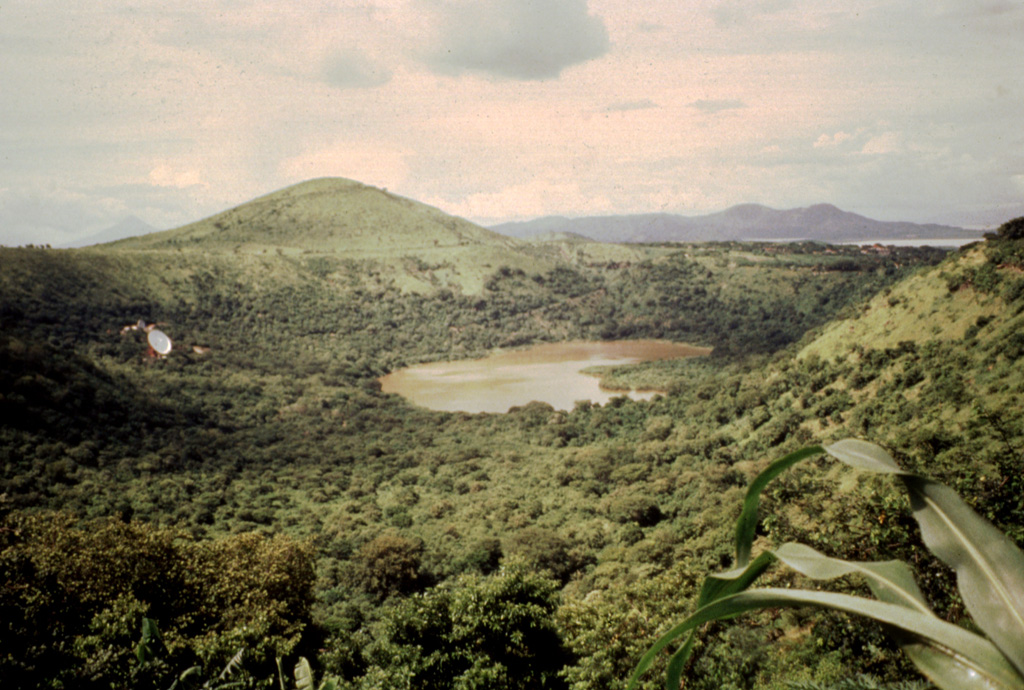
The Nejapa-Miraflores alignment (also known as Nejapa-Ticoma), ~10 km S of Apoyeque near the western margin of the Nicaraguan graben, cuts through the western part of the capital city of Managua and marks the right-lateral offset of the volcanic arc in Nicaragua. This group of features has erupted tholeiitic basaltic rocks similar to those from mid-ocean ridges, with about 40 eruptions during the past 30,000 years, the most recent of which (from Asososca maar) occurred about 1,250 years ago. A series of pit craters and fissure vents extends into Lake Managua and is continuous with the volcanic vents on the Chiltepe peninsula. An area of maars and tuff cones perpendicular to the N-S trend of the alignment forms the scalloped shoreline of Lake Managua. Laguna Tiscapa crater is located several kilometers to the east near the central part of the city of Managua. The elongated Nejapa and Ticoma pit craters are surrounded by small basaltic cinder cones and tuff cones.
Storia delle eruzioni
Cronologia dettagliata
- 1060 (±100 anni)VEI 3Stima geologica1060 – In corsoNejapa maar
- 550 a.C. (±500 anni)VEI ?Stima geologicaBCE 550 – In corso
- 3050 a.C. (±500 anni)VEI ?Stima geologicaBCE 3050 – In corso
- 4390 a.C. (±100 anni)VEI ?Stima geologicaBCE 4390 – In corsoEl Hormigón
- 5230 a.C. (±200 anni)VEI ?Stima geologicaBCE 5230 – In corso
- 5350 a.C. (±200 anni)VEI ?Stima geologicaBCE 5350 – In corso
- 7300 a.C. (±3150 anni)VEI ?Stima geologicaBCE 7300 – In corso
- 7430 a.C. (±300 anni)VEI ?Stima geologicaBCE 7430 – In corsoRefinería crater
Link esterni
- Non ancora su Wikipedia (Italiano). Puoi contribuire su Wikidata.
- 🔗 Pagina originale Smithsonian GVP
⚠ Solo a scopo informativo. Non adatto a situazioni di emergenza.