Picos Volcanic System
Picos Fissural Volcanic System
Frattura eruttiva · Portugal · 350 m
- Tipo
- Frattura eruttiva
- Paese
- Portugal
- Regione
- Oceano Atlantico / Azores-Terceira Rift Volcanic Province
- Altitudine
- 350 m
- Coordinate
- 37.780, -25.670
- Ultima eruzione
- 1652
- Contesto tettonico
- Rift zone / Oceanic crust (< 15 km)
- Forma vulcanica
- Cluster
- Roccia principale
- Trachybasalt / Tephrite Basanite
Sintesi geologica
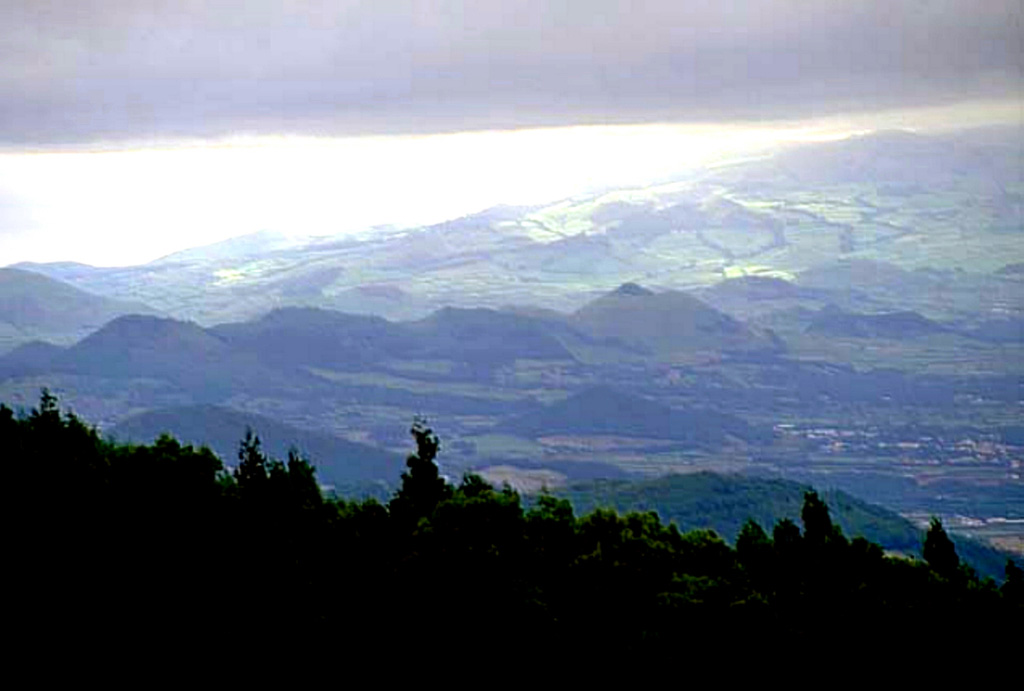
Nearly 200 scoria cones of the Picos volcanic system dot the narrow central zone of Sao Miguel Island between Sete Cidades and Agua de Pau volcanoes. This area of monogenetic fissure-controlled, dominantly basaltic volcanism, much of which post-dates the roughly 5,000-year-old Fogo eruption, cannot be assigned to either volcano and appears related to en-echelon fissures overlying a fracture zone. Thick pumice deposits thought to originate from the Picos system may have originated from vents or a caldera destroyed and now buried by young basaltic volcanism. The most noteworthy of the young vents is Serra Gorda, SE of Siete Cidades, and the cone that produced a lava delta south of Agua de Paul village. The majority of the inhabitants of Sao Miguel Island occupy both coasts below this volcanic zone. At least 18 eruptions have occurred during the past 2,800 years, although the only recorded eruption occurred in 1652 CE. The most recent activity has been basaltic; however, two more-explosive trachytic eruptions occurred during the past 1,100 years.
Sintesi da Wikipedia
Riassunto in ingleseThe Picos Volcanic Fissural System is a system of scoria cones that build up the central region of the island of São Miguel. This volcano is very young with most of it only 5000 years old. The only recorded eruption was in 1652, but seven other eruptions have taken place in the cinder cone group in the last 10,000 years.
Wikipedia · CC BY-SA · Leggi l'articolo completo →
Storia delle eruzioni
Cronologia dettagliata
- 1652VEI 2Osservata1652-10-19 – 1652-10-26Eastern part (SW of Fogo 1 cone)
- 940 (±100 anni)VEI ?Stima geologica940 – In corsoEastern part (Mata des Feiticeiras)
- 850 (±150 anni)VEI ?Stima geologica850 – In corsoEast-central part (Cruz)
- 600 (±100 anni)VEI ?Stima geologica600 – In corsoEast-central part (Caldeirao)
- 510 a.C. (±200 anni)VEI ?Stima geologicaBCE 510 – In corsoNorth-central part (Furna)
- 850 a.C. (±100 anni)VEI ?Stima geologicaBCE 850 – In corsoNorth-central part (Aflitos)
- 4040 a.C.VEI ?Stima geologicaBCE 4040 – In corso
Link esterni
⚠ Solo a scopo informativo. Non adatto a situazioni di emergenza.