Mount Silali
Silali
순상화산 · Kenya · 1528m
- 화산 유형
- 순상화산
- 국가
- Kenya
- 지역
- 동아프리카 / Kenyan Rift Volcanic Province
- 해발
- 1528m
- 좌표
- 1.150, 36.230
- 마지막 분화
- -5050년
- 판구조 환경
- Rift zone / Continental crust (> 25 km)
- 화산 지형
- Shield
- 주요 암석
- Trachyte / Trachydacite
지질학적 요약
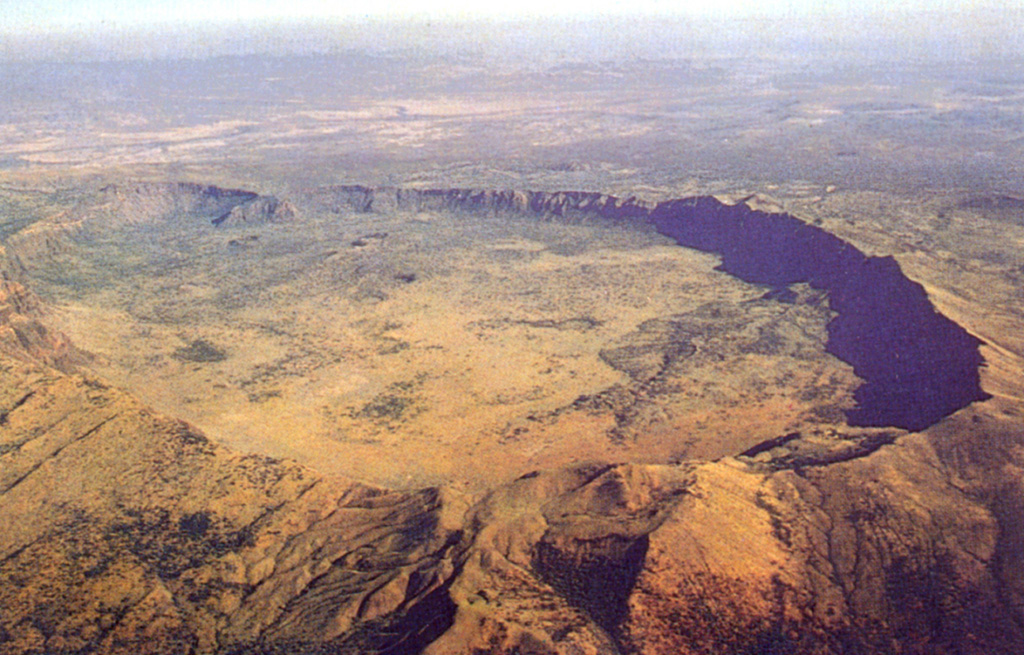
The 30-km-wide Silali trachytic shield volcano, the largest Quaternary volcano in the northern Gregory Rift, completely straddles the East African Rift. The 5 x 8 km summit caldera with 300 m deep walls is thought to have formed incrementally about 63,000 years ago, related to eruption of the Kantenmening basaltic and trachytic lava flows. A series of summit-area lava benches formed by eruptions from circumferential fissures is morphologically similar to Galapagos Islands volcanoes. The N, E, and S flanks are cut by a prominent broad rift zone 10 km wide and 30 km long, with numerous pyroclastic cones. Lava domes on the upper E flank formed during the late Pleistocene and early Holocene, until about 7,000 years ago. Youthful cones are common on the caldera floor and on the N and NE flanks; the youngest lava flows may be little more than a few hundred years old (Williams et al. 1984). Geothermal activity occurs within the caldera and on the upper E flanks.
Wikipedia 요약
영어 요약Mount Silali is a dormant volcano in the Gregory Rift Valley, near Kapedo, Kenya. Silali is south of the Suguta Valley, which reaches northward to Lake Turkana, and is about 70 kilometres (43 mi) north of Lake Baringo.
Wikipedia · CC BY-SA · 전체 기사 보기 →
분화 이력
상세 타임라인
- 기원전 5050년 (±2000년)VEI ?지질학적 추정BCE 5050 ~ 진행 중Upper east flank
- 기원전 6050년 (±3000년)VEI ?지질학적 추정BCE 6050 ~ 진행 중Eastern part of caldera
- 기원전 7050년 (±2000년)VEI ?지질학적 추정BCE 7050 ~ 진행 중Upper east flank
외부 링크
⚠ 참고용 정보입니다. 재난 대응에 사용하지 마세요.